Every sale arrives with its reasoning
Links and codes for your partners. One script tag for your site, or none at all. And for every sale, a stored decision: which touches counted, which won, and why.
A link for the click, a code for everyone else
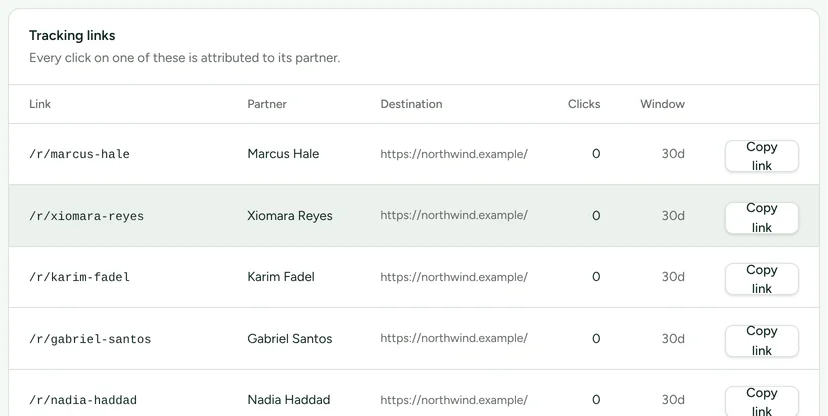
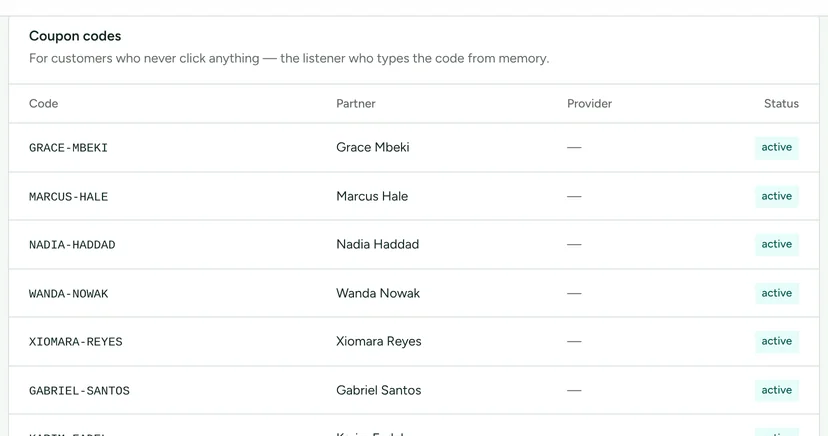
Every partner gets tracking links and a coupon code. A code credits the sale even when no click ever happened, which is how most of a podcast's or a newsletter's buyers arrive.
- Tracking links with sub-ids, deep links and QR codes
- A coupon code attributes a sale with no click at all
- Codes become real discounts in Stripe, Shopify, BigCommerce and WooCommerce
- They pause when a store disconnects and come back when it reconnects
One script tag. Or none at all.
One script tag claims the referral first-party the moment a visitor lands. Selling through Stripe? A visitor id on the checkout credits the partner with no JavaScript on your pages at all.
- The publishable key can record visits and identify customers. It cannot read anything
- No-code installs: the Shopify app, the Refficks WordPress plugin, the BigCommerce app, a Tag Manager template
- Stripe sales attribute through client_reference_id or a visitor id, with no script
- Secret keys live on your server. The tracker's beacon refuses revenue
Written in words, applied the same way every time
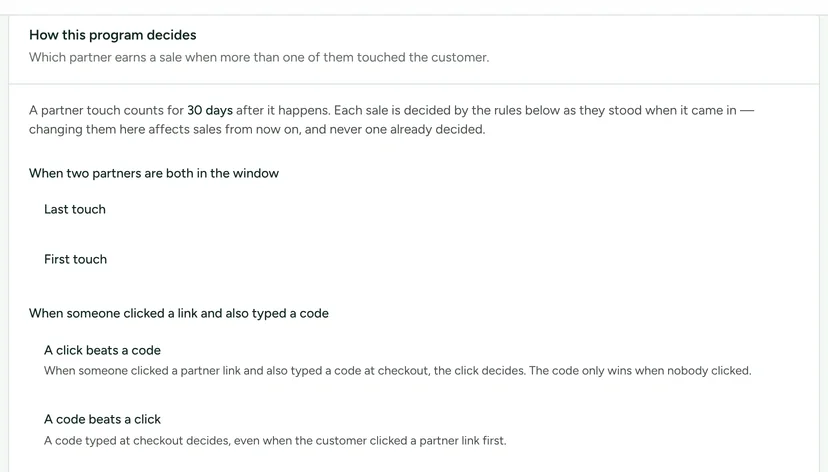
Last-touch by default, or first-touch, across the programme's window. Whether a code beats a click, and whether a customer stays with the partner who first won them, are settings you read as sentences.
- A 30-day window unless you set otherwise; 60 for referral programmes
- When touches compete, your own correction outranks a server's statement, which outranks a click
- Before changing a rule, see what it would have done to up to 1,000 past sales. Nothing is written
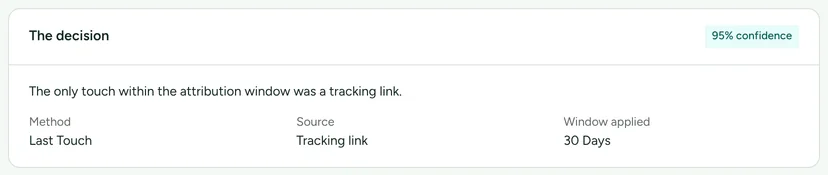
A decision is stored, not recomputed
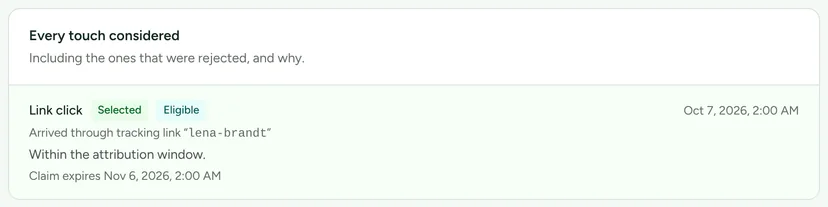
Every attribution is kept with every touch considered, which were eligible, which won, which lost and why, and a confidence score. A sale nobody earned is recorded as exactly that, not dropped.
- “Why this conversion was attributed” shows the reasoning on screen
- Corrections supersede. They never overwrite
- A sale credited to nobody moves to a partner if the buyer is identified within 24 hours, with a reason, a History entry and “Credited later” on the partner's card
- A person can credit one by hand, with a note
Tracking that keeps its hands off the shopper
The same rules this site runs on.
No raw IP address, ever
Fraud signals run on salted hashes, and a store order's buyer IP is replaced with its hash before anything is stored.
Global Privacy Control is honoured
A browser that sends it gets nothing written, not even a cookie. On sites that ask for consent, the tracker waits for it.
Declined consent still credits a code
A shopper who declined can be credited through a partner's code, with no visitor, buyer, IP hash, country or device recorded.
Do Not Track alone is not read
It has no legal force. Global Privacy Control does, so that is the signal Refficks acts on.
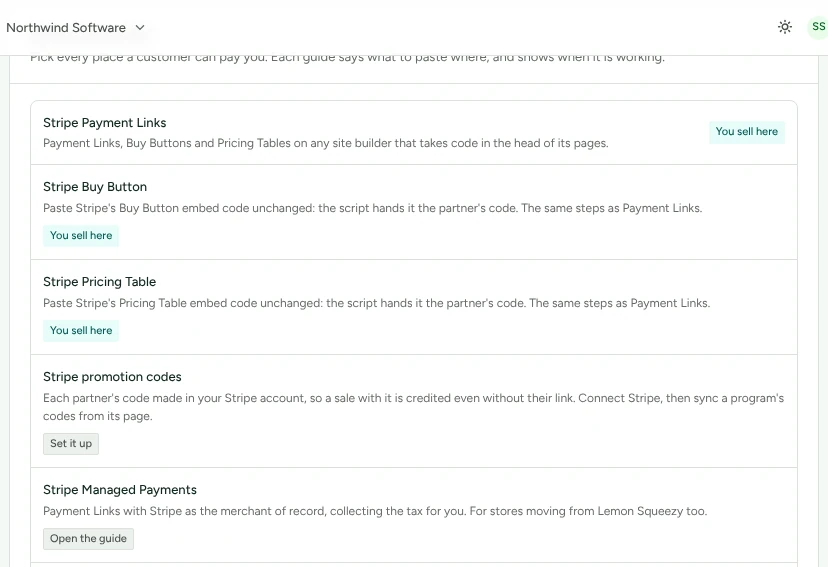
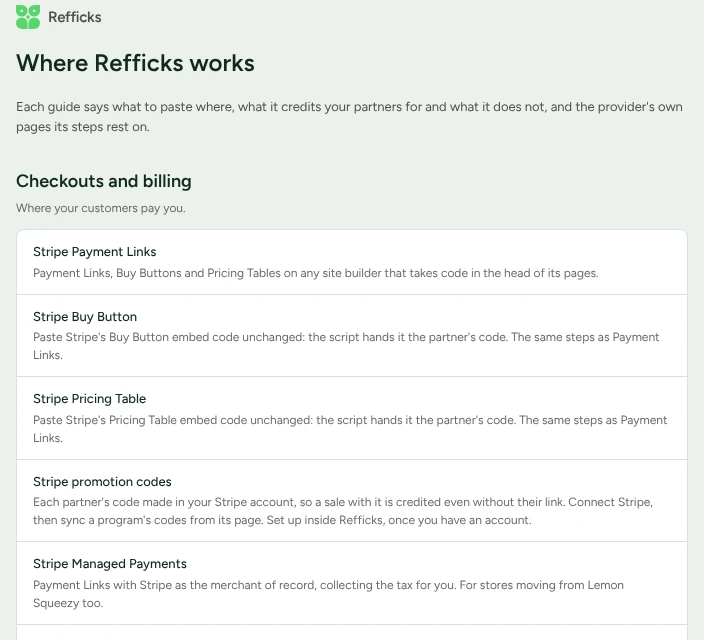
A guide for where your customers pay you
Payment links on site builders, checkouts, forms and booking, analytics, developer frameworks. Each guide says what it cannot do before its steps, and checks what Refficks has actually seen from your site.
- Readable without an account
- Each says what it credits and what it does not
Nothing is processed twice
A retried webhook or a double-submitted event resolves to the original. Idempotency is enforced by the database, so a duplicate is structurally impossible to process twice.
<script
  src="https://go.refficks.com/refficks.js?a=rk_pub_…"
  data-account="rk_pub_…">
</script>
Every sale arrives with its reasoning
Links, codes, one script tag, and a decision you can read for every sale.